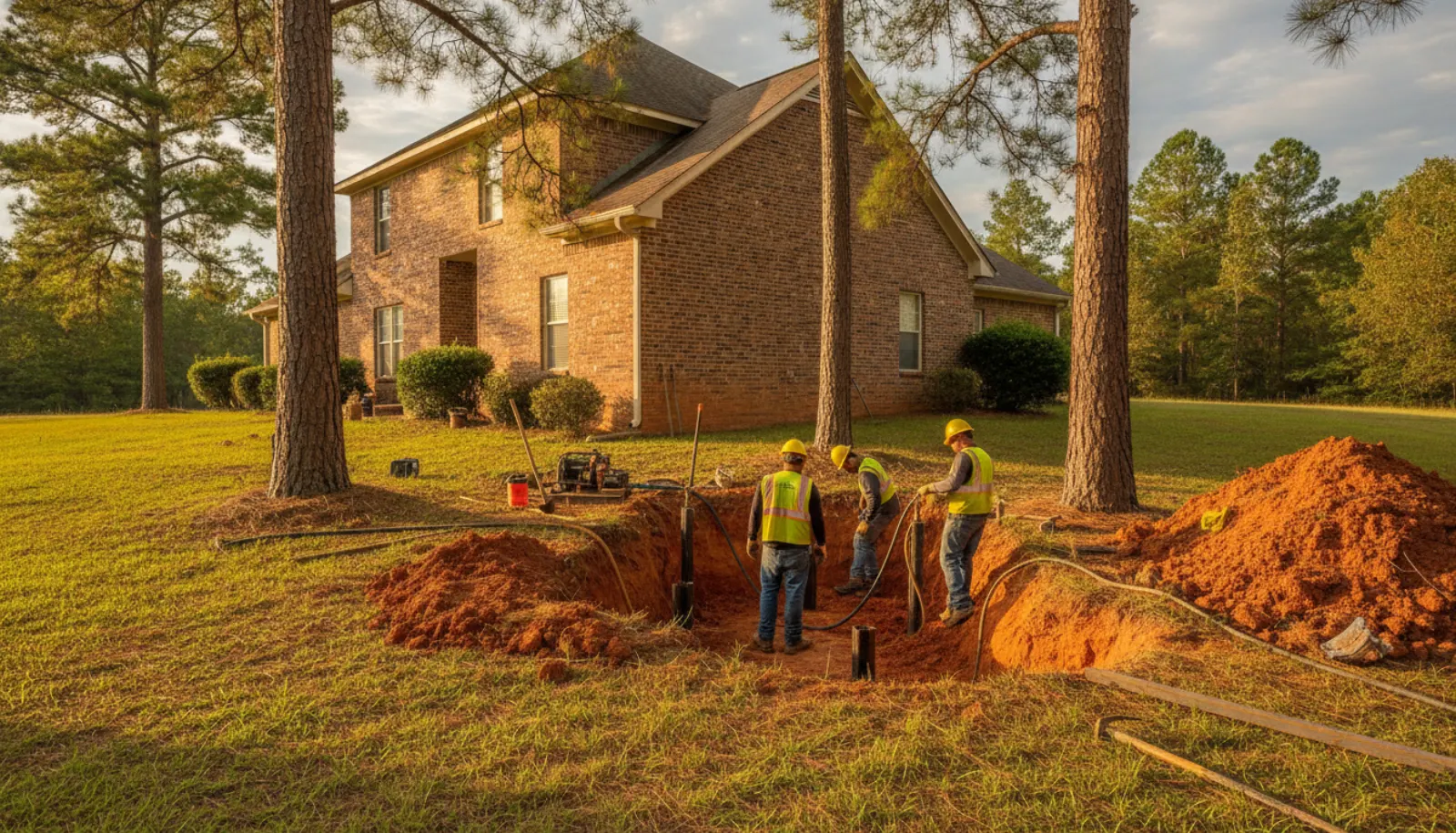
Why floors slope in Tallahassee
Tallahassee has two kinds of homes and two kinds of ground, and each fails in its own way.
Crawl space homes. Older neighborhoods like Myers Park, Indianhead and Lafayette Oaks have many homes built in the 1950s to 1970s on raised piers with vented crawl spaces. One local inspection guide says leaks under kitchens and baths and damp subfloors are common there. Wet wood gets soft. Piers can sink into wet dirt. Shims slip. The floor above sags.
Slab homes. Census survey data for the Leon County school district shows more than half of homes were built between 1970 and 1999. Many of these are now 25 to 55 years old. In a home on a concrete slab, when the soil under one edge gets soaked or washes out, that edge can drop and tilt the floor.
Clay in the north. Much of Tallahassee sits in the Red Hills. Soils like the Orangeburg series have sandy clay below a sandy top layer. Wet and dry spells make clay soil move under a house.
Sand over limestone in the south. In the Woodville Karst Plain, a thin layer of sand covers limestone that slowly dissolves. Soil can wash down into gaps in the rock and leave a low spot under the house.
Humid air under the floor. A code guide for hot, humid areas says floors over vented crawl spaces are prone to trapped moisture, mold and rot. Vinyl or other plastic-type flooring can trap that moisture in the wood below.